Causes & symptoms
Water Retention Causes: 12 Reasons Your Body Holds Extra Fluid

By Dana Reyes
Published Sep 1, 2026 · 12 min read
Quick answer
Water retention has a long list of possible causes. Most are everyday and harmless — sitting too long, too much sodium, hormonal shifts, hot weather, some medications. A smaller group point to disease: the heart, kidneys, liver, thyroid or lymphatic system. Sudden, one-sided, or breathless swelling always needs a doctor, not a home remedy.
Editorial note: This article links to a supplement we independently reviewed. If you buy through it we may earn a small commission at no cost to you. This page is educational — not medical advice.
What is water retention, exactly?
Small blood vessels called capillaries constantly let a little fluid seep into the surrounding tissue, and the lymphatic system normally drains it back out. Water retention — the medical term is edema — happens when that balance tips: more fluid leaks in than drains out, and it pools in the soft tissue under your skin.
You can usually feel it before you can see it. Press a finger into the swollen area for five seconds. If it leaves a dent that takes a moment to fill back in, that's called pitting edema, and it's the clearest sign that what you're looking at is fluid, not fat or muscle.
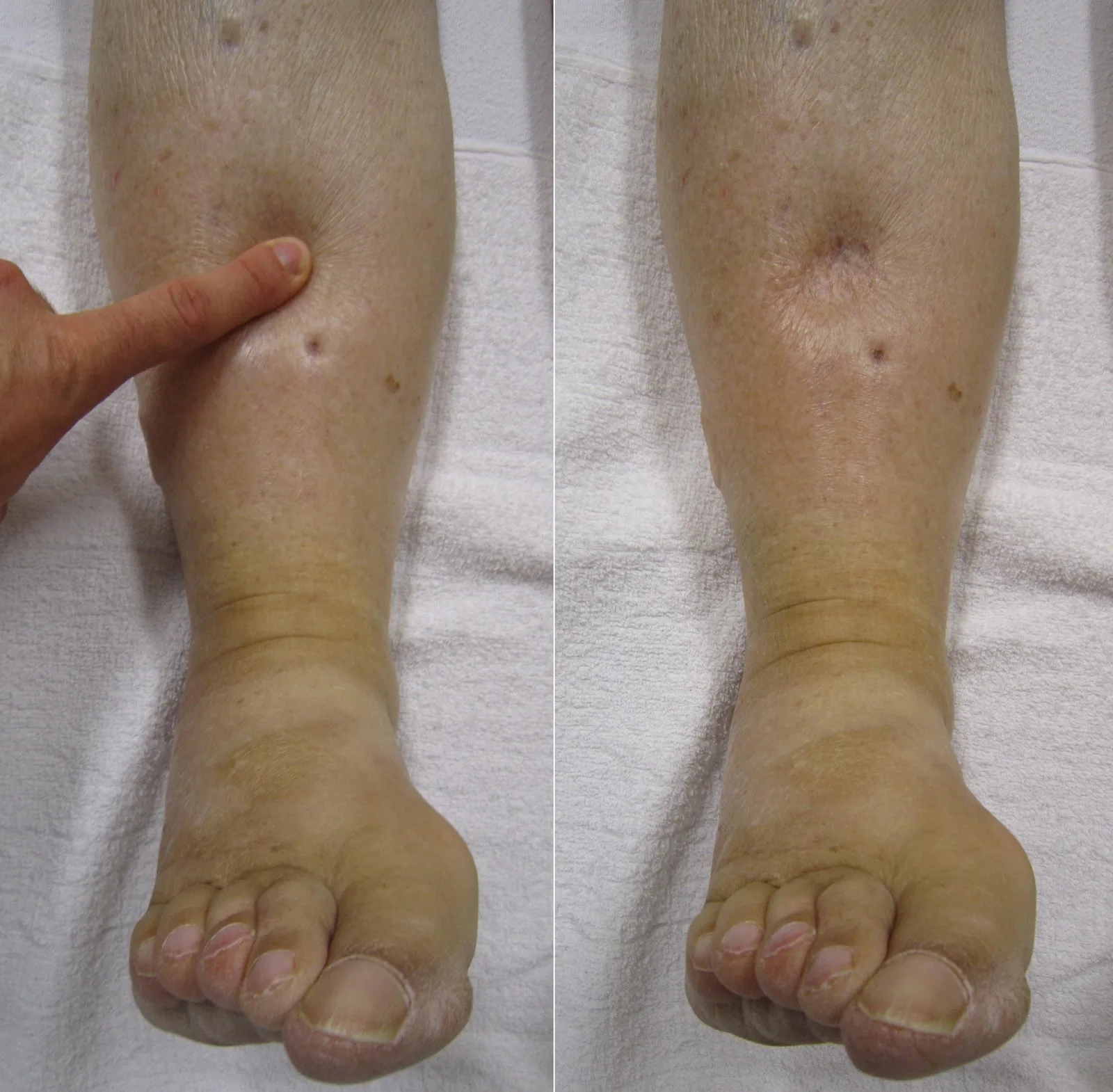 Pitting edema: the skin holds the shape of a finger press for several seconds. Photo: James Heilman, MD (CC BY-SA 3.0, Wikimedia Commons).
Water retention is not a diagnosis by itself — it's a symptom. The same puffy ankle can mean you sat through a long flight, or that your heart, kidneys or liver need attention. The twelve causes below run roughly from the mundane to the serious, in that order.
Mayo Clinic: "Edema is swelling caused by too much fluid trapped in the body's tissues," and it "occurs when tiny blood vessels in the body, also known as capillaries, leak fluid."
Mayo Clinic — Edema.
Everyday causes — usually nothing to worry about
These five account for most of the water retention people search for. None of them need a diagnosis; all of them respond to a change in habits.
1. Sitting or standing in one place too long
Your calf muscles work as a pump, squeezing the veins in your lower leg to push blood back up toward your heart every time you take a step. Stop moving for hours — at a desk, on a long flight, on your feet all shift at a register — and that pump switches off. Fluid follows gravity down into your ankles and stays there until you move again.
2. Eating too much sodium
Wherever sodium goes in the body, water follows it. Eat more salt than your kidneys can process quickly, and the extra sodium pulls extra water into your tissue along with it. Most of it isn't from the salt shaker — it's baked into bread, deli meat, canned soup, sauces and restaurant meals.
 Whole foods — fresh vegetables, fruit, unsalted nuts, plain grains — are the easiest way to keep sodium under 1,500 mg. Photo: Shixart1985 (CC BY 2.0, Wikimedia Commons).
Cleveland Clinic lists "what you eat (especially foods with a lot of salt [sodium], like chips, processed meat, cheese, canned soup and fast food)" among the common causes of edema.
Cleveland Clinic — Edema. American Heart Association: Americans consume "on average, over 3,100 milligrams daily," against "an optimal goal of no more than 1,500 mg a day for most adults."
AHA.
3. Hormonal shifts — pregnancy and your period
Estrogen and progesterone both influence how your kidneys handle sodium, and both hormones swing hard during pregnancy and in the days before a period. Mayo Clinic lists "being premenstrual" and "being pregnant" as everyday causes of mild edema in their own right. If premenstrual swelling is what brought you here, the full article on period-related water retention covers the timeline and what actually helps.
4. Certain medications
A number of common prescriptions list swelling as a known side effect. Mayo Clinic names blood pressure medicines, NSAIDs (like ibuprofen), steroid medicines, estrogens, nerve-pain medicines and "certain diabetes medicines called thiazolidinediones" specifically. If swelling started within weeks of a new prescription, that timing is worth mentioning to whoever prescribed it — don't stop a medication on your own before checking.
Mayo Clinic: edema "can be a side effect of some medicines," including "high blood pressure medicines," "nonsteroidal anti-inflammatory medicines," "steroid medicines," "estrogens," and "certain diabetes medicines called thiazolidinediones."
Mayo Clinic — Edema.
5. Hot weather
Heat makes blood vessels widen (vasodilation) to help your body lose heat through the skin. Wider vessels leak more easily, and gravity pulls the extra fluid down into your feet and ankles. It's most noticeable in the first couple of days after arriving somewhere hot, and it's more common in older adults. The full article on ankle swelling in hot weather covers seven fixes for it.
NIH StatPearls: "Heat edema: swelling and possible discomfort in the distal extremities due to vasodilation and gravity-dependent pooling of fluids."
NCBI Bookshelf — Heat Illness.
Causes tied to your veins, tissues and glands
This group is less common than the everyday causes above, and more likely to need an actual diagnosis rather than a lifestyle fix.
6. Weak vein valves (chronic venous insufficiency)
Veins in your legs rely on one-way valves to keep blood moving up toward your heart against gravity. When those valves weaken or get damaged, blood pools in the lower leg instead of moving on, and fluid leaks out into the surrounding tissue. It tends to build through the day and improve overnight with the legs flat. The article on water retention in the legs goes deeper into telling this apart from other causes.
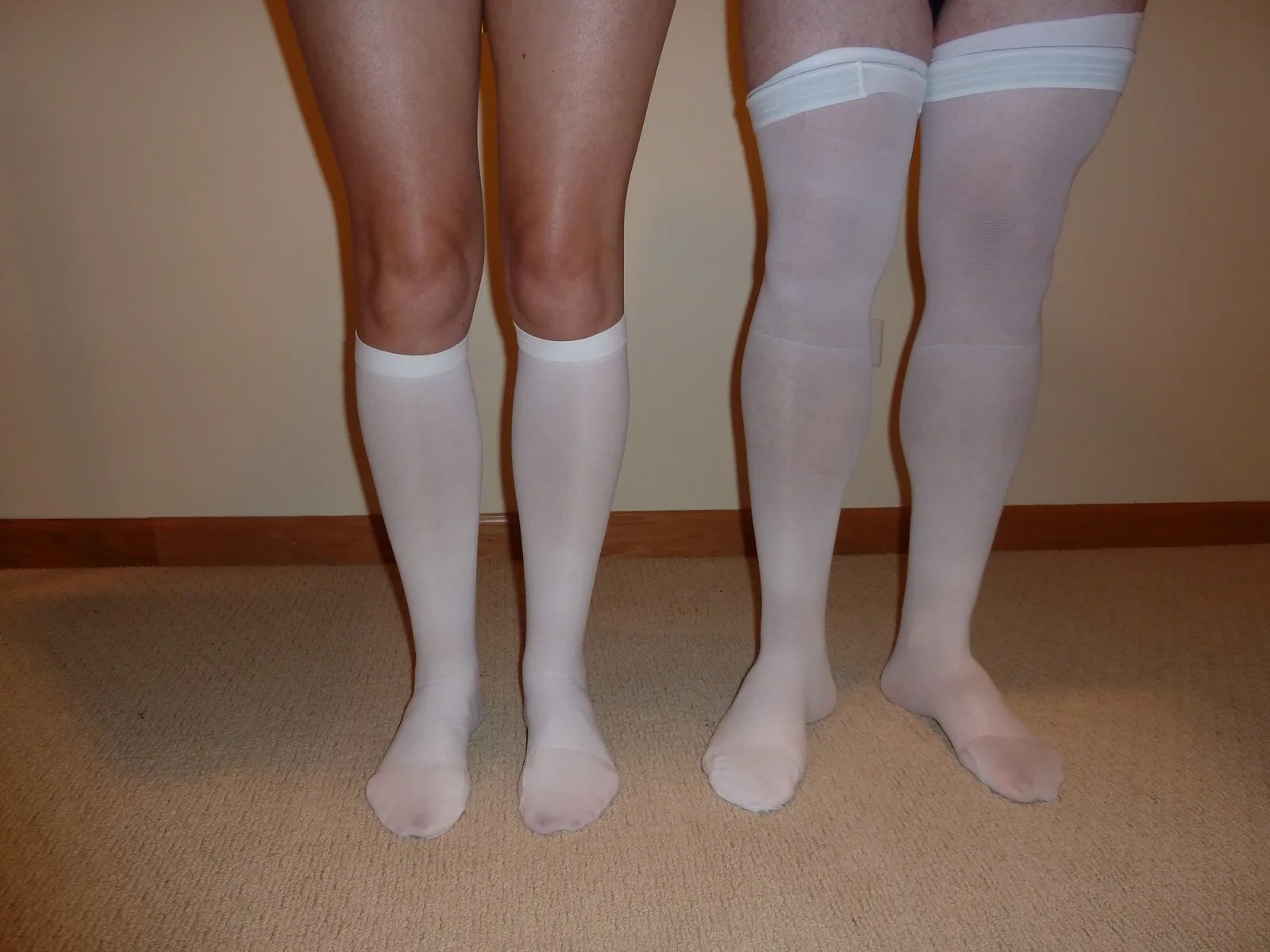 Graduated compression stockings push blood back toward the heart when the leg's own valves aren't doing the job. Photo: Lentpjuve (CC BY-SA 4.0, Wikimedia Commons).
Mayo Clinic on chronic venous insufficiency: "Damage to the valves allows blood to pool in the leg veins and causes swelling."
Mayo Clinic — Edema.
7. A severe, long-term lack of protein
Protein in your blood — mainly albumin — helps hold fluid inside your blood vessels instead of letting it leak into tissue. Go without enough protein for long enough, through a very restrictive diet or an underlying illness that burns through it, and that fluid starts to escape into the tissue instead.
Mayo Clinic: "Severe, long-term lack of protein in the diet over time can lead to edema."
Mayo Clinic — Edema.
8. Thyroid disease
Thyroid hormone helps set the pace for how your body manages fluid, along with almost everything else metabolic. When thyroid levels drift too high or too low, swelling can follow — sometimes in the legs, sometimes around the face. A blood test settles the question quickly, and treating the thyroid usually clears the swelling with it.
Cleveland Clinic lists "chronic conditions, like thyroid disease" among the common causes of edema.
Cleveland Clinic — Edema.
9. Problems with your lymphatic system
Your lymphatic system is a separate drainage network that carries excess fluid and immune cells back into your bloodstream. When it's blocked — by surgery, radiation, infection or a tumor pressing on the vessels — fluid backs up in the affected limb instead of draining. This specific type is called lymphedema, and it's usually one-sided and doesn't ease overnight the way everyday edema does.
CDC: "Lymphedema is swelling due to build-up of lymph fluid in the body. Lymph nodes act like a drain in your sink. If the drain is clogged, the fluid cannot drain."
CDC — Lymphedema.
Organ disease — the causes that need a doctor
These three are the least common causes on this list, and the ones where swelling is a symptom of something that needs real treatment, not a home remedy.
10. Kidney disease
Your kidneys filter waste and extra water out of your blood. When the filtering units (the glomeruli) are damaged or inflamed, protein can leak from your blood into your urine instead of staying where it belongs — a pattern called nephrotic syndrome. Losing that protein lets fluid escape into your tissue instead of staying in circulation.
NIDDK: nephrotic syndrome is "a group of symptoms that indicate your kidneys are not working properly," including "puffy eyelids and swelling in the legs, ankles, feet, lower abdomen, or other parts of your body," "low levels of a protein called albumin in your blood," and "foamy urine."
NIDDK — Nephrotic Syndrome in Adults.
11. Liver damage (cirrhosis)
A scarred, cirrhotic liver struggles to make enough albumin, the same blood protein that keeps fluid inside your vessels. It also raises pressure in the veins that feed the liver. Both effects push fluid out into the belly and legs. Fluid buildup in the abdomen from this cause has its own name — ascites.
Mayo Clinic: "Liver damage from cirrhosis can cause fluid to build up in the stomach area and in the legs. This fluid buildup in the stomach area is known as ascites."
Mayo Clinic — Edema.
12. Heart failure
When the heart's lower chambers can't pump as well as they should, blood backs up in the veins instead of moving forward efficiently. That backup raises pressure in the leg veins and pushes fluid out into the ankles and feet — often worse by evening, worse in both legs at once. The same backup can reach the lungs.
Mayo Clinic: heart failure "may cause fluid to build up in the lungs too," and "known as pulmonary edema, this can lead to shortness of breath."
Mayo Clinic — Edema.
Quick way to sort the list
- Both legs, builds through the day, gone by morning: almost always an everyday cause (1–5).
- Both legs, worse by evening, better with legs elevated, comes back next day: often venous or lymphatic (6, 9).
- One leg, sudden, painful: possible blood clot — see a doctor the same day.
- Whole body, with fatigue, breathlessness, or changes in urine or skin color: possible heart, kidney, liver or thyroid cause (8, 10–12) — see a doctor.
See a doctor if:
- Swelling affects only one leg, especially with calf pain, warmth or redness — a possible blood clot.
- You have shortness of breath, chest pain, or an irregular heartbeat.
- Your skin or the whites of your eyes turn yellow (a sign of liver trouble).
- Your urine looks foamy, or you notice sudden weight gain from fluid.
- Swelling keeps getting worse instead of easing overnight, or shows up without an obvious cause.
- You have a diagnosed heart, kidney, liver or thyroid condition and the swelling pattern has changed.
Cleveland Clinic advises calling a provider for swelling with severe pain, shortness of breath, fever, or swelling that affects only one limb.
Reader-favorite formula
Flush Factor Plus — the fluid-balance supplement we reviewed
Flush Factor Plus is a plant-based formula built on six plant-derived ingredients — pineapple (bromelain), shatavari, L-citrulline, black cumin seed, beet root and hibiscus — in a single 500 mg blend. It's built for the everyday causes on this list, not the disease-related ones — no supplement replaces a diagnosis for kidney, liver, heart or thyroid problems. Our full review covers which claims hold up, who should skip it, and the side effects worth knowing.
Price, shipping and guarantee. The official site sells bundles only, no single bottles: $158 USD for 2 bottles ($79 each), $207 for 3 ($69 each) or $294 for 6 ($49 each). Shipping is free inside the United States, 5–7 working days ($15.95 USD to Canada, the UK and Ireland, and Australia and New Zealand, 10–15 working days). Every official order carries a 60-day money-back guarantee that starts the day your package is delivered — it covers opened bottles, but you post them back at your own cost. Prices verified on the official checkout on August 25, 2026.
Read the full Flush Factor Plus review →
Affiliate link. Independent review. Not a substitute for a doctor.
Frequently asked questions
What is the most common cause of water retention?
For most people it's an everyday habit rather than a disease: sitting or standing in one position too long, eating more sodium than the body can process quickly, or the hormonal shift before a period or during pregnancy. Mayo Clinic groups these together as causes of mild edema. Disease-related causes exist too, but they are far less common than these three.
Can medications cause water retention?
Yes. Mayo Clinic lists several drug classes that can cause edema as a side effect: blood pressure medicines, nonsteroidal anti-inflammatory drugs (NSAIDs like ibuprofen), steroid medicines, estrogens, certain diabetes medicines called thiazolidinediones, and some medicines for nerve pain. If swelling started after a new prescription, ask your prescriber before stopping anything — some of these drugs cannot be stopped abruptly.
What deficiency causes water retention?
A severe, long-term lack of dietary protein. Mayo Clinic states plainly that a severe, long-term lack of protein in the diet over time can lead to edema. Low blood protein (albumin) also shows up as a symptom of nephrotic syndrome, a kidney condition — so persistent swelling with a poor diet history is worth mentioning to a doctor, not just treating with a supplement.
Can thyroid problems cause leg swelling?
Yes. Cleveland Clinic lists chronic conditions like thyroid disease among the common causes of edema. Thyroid hormone affects how your body manages fluid and metabolism, and swelling can appear when thyroid levels are off. A simple blood test checks this, and treating the thyroid condition typically resolves the swelling.
How can you tell if water retention is caused by something serious?
Watch for swelling that affects only one leg, especially with calf pain, warmth or redness; shortness of breath, chest pain or an irregular heartbeat; skin or eyes turning yellow; foamy urine; or swelling that keeps getting worse instead of settling overnight. Any of these calls for a doctor's visit, not a home remedy.
Does dehydration cause water retention?
It can contribute. When you drink too little, the body responds by holding on to the sodium and water it already has, rather than releasing it. Steady sipping through the day — rather than cutting back when you feel puffy — usually helps more than it hurts.
Is lymphedema the same as regular water retention?
No. The CDC describes lymphedema as swelling from a build-up of lymph fluid when the lymph system's drainage is blocked, comparing it to a clogged drain. Everyday water retention involves blood vessels leaking fluid into tissue; lymphedema involves a separate drainage system failing to clear it. Both can look similar on the leg, but lymphedema needs its own diagnosis and treatment.
About the author — Dana Reyes
Founder, The Light Legs Guide
For years Dana worked ten-hour shifts on her feet in retail, so she knows exactly how heavy and sore legs feel at the end of a hot day — and how much a long flight makes it worse. Swelling runs in her family too: her mother, grandmother, aunts and cousins all deal with it. She started The Light Legs Guide to share what actually helped her, with every claim linked to a source you can check.
Dana is not a medical professional. Nothing on this site is medical advice.
 Most water retention comes from an everyday cause and settles with a change of habits. The list above is here so you know when it doesn't. Photo: Felix Russell-Saw (CC0, Wikimedia Commons).