Everyday leg health
How to Choose Shoes That Don't Make Swelling Worse in Summer

By Dana Reyes
Published Aug 24, 2026 · 7 min read
Quick answer
Look for width, an adjustable closure, a low heel and a soft sole. The closure matters most — straps or laces let the shoe grow with your foot through the day, which slip-ons cannot do. Buy in the late afternoon, when your feet are at their largest. The right shoe accommodates swelling; it does not treat it.
Editorial note: This article links to a supplement we independently reviewed. If you buy through it we may earn a small commission at no cost to you. This page is educational — not medical advice. We do not sell shoes and get nothing from any footwear brand.
Why do shoes feel tighter in summer?
Heat makes your blood vessels widen so the body can dump warmth through the skin. Wider vessels leak more plasma into the surrounding tissue, and that fluid obeys gravity — down into the ankles and feet.
The shoe that fit fine in March is the same size in July. Your foot is not. The full physiology is in our guide on why ankles swell in hot weather.
What matters here is the pattern: the swelling builds through the day and eases overnight. That means footwear has to fit a foot that changes size — which is a different problem from footwear that simply fits.
What makes a shoe worse for swollen feet?
Four features cause most of the trouble.
What to avoid
- A fixed, unadjustable fit. Slip-ons, loafers and ballet flats have one width and no way to change it.
- Narrow or pointed toe boxes. They squeeze the forefoot exactly where daytime fluid collects.
- High heels. They shift weight forward and switch off the calf pump that moves fluid back up the leg.
- Tight elastic edges. Sock cuffs and stretchy shoe openings leave a ring that traps fluid below it.
The NHS is blunt about the last three, listing "do not wear clothes, socks or shoes that are too tight" among the things to avoid when you have oedema. The National Institute of Diabetes and Digestive and Kidney Diseases adds that you should not wear shoes with pointed toes or high heels, "because they put too much pressure on your toes."
What should you look for instead?
The NHS gives the short version: wear wide, comfortable shoes with a low heel and a soft sole. Here is what that looks like in a shop.
1. An adjustable closure — this is the one that matters
Straps, laces or hook-and-loop fastening let you loosen the shoe at 4pm without changing shoes. A slip-on cannot do that. If you only apply one thing from this article, make it this: buy shoes you can widen.
2. Real width, not just a bigger size
Going up a size makes a shoe longer, not wider, and a long-but-narrow shoe slides at the heel while still pinching the forefoot. Look for a wide or extra-wide fitting instead. The NIDDK's test is simple — make sure they feel good and have enough room for your toes.
3. A low heel and a soft, flexible sole
A flat or low heel keeps the calf muscle working as you walk, and the calf is the pump that pushes fluid back up toward your chest. A sole that flexes lets the foot go through its full motion instead of landing rigid.
4. Breathable upper
Mesh, canvas and soft leather let heat escape. Synthetic uppers that do not breathe keep the foot warm, and a warmer foot holds more fluid. The NIDDK notes that walking shoes and athletic shoes are good for daily wear because they support your feet and allow them to "breathe."
5. A seam-free interior at the pressure points
Swollen skin is stretched and more fragile. Internal seams that were unnoticeable on a normal foot become rub points on a puffy one.
When is the best time to buy shoes?
Late afternoon or evening — and this single detail undoes more bad purchases than any brand recommendation.
Your feet are at their smallest when you get out of bed and at their largest at the end of the day. A shoe fitted at 9am on a swelling-prone foot is being fitted to the wrong foot. By 5pm it is a size too small.
NIDDK (National Institutes of Health): "Buy shoes at the end of the day, when your feet are the largest, so that you can find the best fit."
NIDDK — Diabetes and foot problems.
Two things to do while you are there: wear the socks you actually use, and stand up and walk. Feet spread under body weight, and a shoe judged sitting down is judged on a smaller foot.
Are sandals a good idea for swollen feet?
Adjustable sandals are one of the better summer options, for the same reason as above — the straps give you room to adapt.
What to look for: a back strap that holds the heel, a cushioned footbed, a low wedge or flat sole, and at least two adjustment points so you can change the fit across the instep as well as the ankle.
What to skip: flip-flops and backless slides. They force your toes to grip with every step to keep the shoe on, which tires the foot, gives no arch support, and does nothing to help fluid move. They feel like relief on a swollen foot and are not.
What about compression socks in hot weather?
Compression still works when it is warm — the temptation to abandon it in July is what undoes many people's summer.
The awkward part is combining it with open footwear. Compression socks bunch under sandal straps and create pressure ridges. A workable pattern is compression plus a breathable walking shoe during the day, then open footwear in the evening once you have had your legs up.
The NHS advice pairs with this: raise your legs on a chair or pillows when you can, get gentle exercise like walking to improve blood flow, and avoid standing or sitting for long stretches.
Footwear is not the answer if:
- Only one foot or leg is swollen, especially with calf pain, warmth, or redness.
- You have diabetes and notice swelling in your feet, ankles, or legs — the NHS lists this as a reason to get urgent advice.
- You have reduced feeling in your feet. Nerve damage means you cannot trust comfort as a guide: as the NIDDK puts it, you may not feel "a pebble inside your sock or a blister on your foot." Have footwear fitted professionally.
- The skin over the swelling is broken, weeping, or looks infected.
- Swelling comes with shortness of breath or chest pressure.
Can the right shoes actually fix the swelling?
No, and it is worth being clear about it, because a lot of pages that rank for this question quietly imply otherwise.
A well-chosen shoe stops swelling from hurting. It stops the rubbing, the pressure ridges, the sore forefoot at 6pm. What it cannot do is reduce the fluid, because the fluid is not a footwear problem — it comes from heat, hours on your feet, sodium, hormones, medication, or circulation.
Which means shoes are the comfort half of the job. The other half is the same short list that runs through this whole site: get the ankles above the heart daily, keep the calves moving, watch sodium in hot weather, and keep drinking. Our pillar guide on swollen ankles covers each one, and water retention in the legs goes deeper on the fluid side.
Reader-favorite formula
Flush Factor Plus — for the half that shoes can't reach
Once the footwear is sorted, what is left is the fluid itself. Flush Factor Plus is the plant-based fluid-balance formula we spent weeks reviewing, built on six plant-derived ingredients — pineapple (bromelain), shatavari, L-citrulline, black cumin seed, beet root and hibiscus — in a single 500 mg blend. Our review covers which ingredient claims hold up, who should skip it, and the refund window.
Price, shipping and guarantee. The official site sells bundles only, no single bottles: $158 USD for 2 bottles ($79 each), $207 for 3 ($69 each) or $294 for 6 ($49 each). Shipping is free inside the United States, 5–7 working days ($15.95 USD to Canada, the UK and Ireland, and Australia and New Zealand, 10–15 working days). Every official order carries a 60-day money-back guarantee that starts the day your package is delivered — it covers opened bottles, but you post them back at your own cost. Prices verified on the official checkout on August 25, 2026.
Read the full Flush Factor Plus review →
Affiliate link. Independent review. Not a substitute for a doctor.
Frequently asked questions
What kind of shoes are best for swollen feet?
The NHS recommendation is direct: wear wide, comfortable shoes with a low heel and a soft sole. Add an adjustable closure — straps, laces or hook-and-loop — so the shoe can widen as your foot does through the day. Walking and athletic shoes work well for daily wear because they support the foot and let it breathe.
What time of day should I buy shoes if my feet swell?
Late afternoon or evening. The National Institute of Diabetes and Digestive and Kidney Diseases advises buying shoes at the end of the day, when your feet are the largest, so you find the best fit. A shoe fitted at 9am on a swelling-prone foot will be too small by 5pm.
Are sandals good for swollen feet in summer?
Adjustable sandals are among the best summer options, because straps let you loosen the fit as the foot expands. Choose ones with a back strap, a cushioned footbed and a low heel. Skip flip-flops and slides — they force your toes to grip to keep the shoe on, which tires the foot and offers no support.
Can wearing the right shoes stop swelling?
No. The right shoe stops swelling from hurting; it doesn't stop the swelling. Footwear accommodates the fluid but does nothing about why the fluid is there. The causes — heat, standing all day, sodium, hormones, circulation — need addressing separately, and swelling that persists needs a doctor.
Should I wear compression socks with sandals in hot weather?
Compression works in heat, but sandals and compression rarely pair well — the sock bunches under straps and creates pressure points. A better summer combination is compression socks with a breathable walking shoe in the daytime, and open footwear in the evening once your legs have been elevated.
Why do my shoes only feel tight in summer?
Heat makes blood vessels widen so the body can shed warmth, and more plasma seeps into the surrounding tissue. That fluid follows gravity into the feet and ankles, so the same shoe that fit in March presses in July. It usually builds through the day and eases overnight.
When is swollen feet with tight shoes a medical problem?
See a doctor if only one foot is swollen, if there is calf pain, warmth or redness, if the skin is broken or weeping, if you have diabetes and notice any swelling in your feet, ankles or legs, or if swelling comes with shortness of breath. Anyone with reduced feeling in their feet should have footwear checked professionally rather than judged by comfort.
About the author — Dana Reyes
Founder, The Light Legs Guide
For years Dana worked ten-hour shifts on her feet in retail, so she knows exactly how heavy and sore legs feel at the end of a hot day — and how much a long flight makes it worse. Swelling runs in her family too: her mother, grandmother, aunts and cousins all deal with it. She started The Light Legs Guide to share what actually helped her, with every claim linked to a source you can check.
Dana is not a medical professional. Nothing on this site is medical advice.
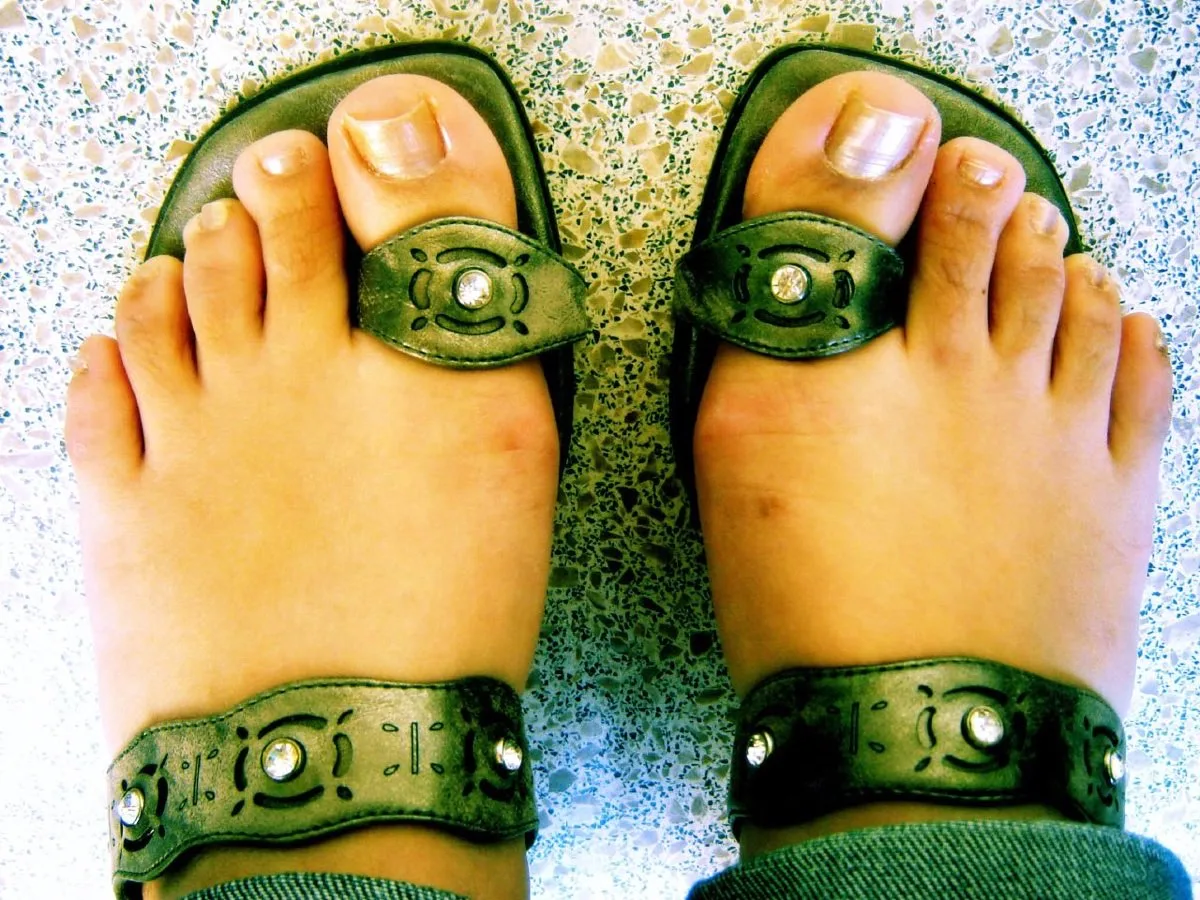 Straps beat slip-ons when feet change size through the day. Photo: E. Başak (CC BY-SA 2.0, Wikimedia Commons).