Supplements, checked
Best Lymphatic Drainage Supplements (2026): What Works, What to Skip

By Dana Reyes
Published Nov 3, 2026 · 10 min read

Quick answer
No supplement pumps lymph the way walking or massage does. A few ingredients do have human studies for less swelling: horse chestnut seed extract and MPFF for vein-related leg swelling, and bromelain for swelling after surgery. For everyday leg puffiness, our top pick is Flush Factor Plus. Most herbal "lymph drops" have no human trials.
Editorial note: This article recommends a supplement we independently reviewed. If you buy through our links we may earn a small commission at no cost to you. This page is educational — not medical advice.
Type "lymphatic drainage supplement" into Google and most of the first page is shops selling herbal drops. A few of the "best of 2026" rankings you'll find are paid announcements posted on unrelated websites.
We did the opposite. We opened the studies, checked which ingredients have been tested in people, and wrote down what we found — including the parts that don't flatter any product, ours included.
What does a lymphatic drainage supplement actually do?
Your blood vessels leak fluid into your tissues all day long. That is normal. Most of it goes back into the blood on its own. The rest is collected by your lymphatic system and returned to the bloodstream.
Cleveland Clinic: "Every day, about 20 liters of plasma (the liquid part of your blood) flow out of tiny pores in the thin walls of your capillaries." "Each day, about 17 liters of plasma return to your bloodstream in this way." The remaining fluid is picked up by lymphatic capillaries.
Cleveland Clinic — Lymphatic System.
Here is the part that matters for supplements. Lymph has no heart pushing it. Cleveland Clinic explains that it moves because of "the pulsing of nearby arteries and squeezing of nearby muscles." That is why a walk, a calf raise or a massage moves lymph, and a capsule cannot.
So what can a supplement do? The realistic job is upstream: less fluid leaking into the tissue in the first place, through healthier vein walls, calmer inflammation or better circulation. That is a real effect, but it is not "drainage." Be wary of any label that promises to "flush" or "detox" your lymph.
Is your swelling a lymph problem or everyday fluid retention?
This question decides whether a supplement makes sense at all.
Two very different things
- Everyday fluid retention. Both ankles puff up by evening and go down overnight. It gets worse with heat, long days on your feet, salty food, flights or your cycle. This is the kind most people mean when they search for a lymphatic drainage supplement. Our guide on water retention in the legs walks through the causes.
- Lymphedema. A long-term condition where the lymphatic system itself is damaged or doesn't work properly — often after cancer treatment that involved the lymph nodes. The swelling tends to get worse without treatment, and the skin can harden or thicken.
NHS: "There's no cure for lymphoedema, but it's usually possible to control the main symptoms using techniques to minimise fluid build-up and stimulate the flow of fluid through the lymphatic system." These include "wearing compression garments, taking good care of your skin, moving and exercising regularly, having a healthy diet and lifestyle, and using specialised massage techniques."
NHS — Lymphoedema.
No supplement is on that list. If you have lymphedema, or you've had lymph nodes removed, your plan belongs with a lymphedema specialist. Everything below is about the everyday kind.
Which ingredients have real human studies?
We ranked the ingredients you'll see on "lymphatic" and "anti-swelling" labels by the strength of the human evidence — not by how often they're advertised.
1. Horse chestnut seed extract — the strongest evidence, for vein-related swelling
This is the best-studied ingredient in the whole category. A Cochrane review — the gold standard for summing up trials — looked at horse chestnut seed extract in people with chronic venous insufficiency (CVI), where weak leg veins let fluid pool.
Cochrane review: "Leg volume was assessed in seven placebo-controlled trials. Six trials (n = 502) suggested a WMD of 32.1ml (95% CI 13.49 to 50.72) in favour of HCSE compared with placebo. One trial indicated that HCSE may be as effective as treatment with compression stockings." The authors add that "larger, definitive RCTs are required to confirm the efficacy."
Pittler & Ernst, Cochrane Database Syst Rev 2012 (PMID 23152216).
The catch: it was tested in people with diagnosed vein disease, not in people with ordinary end-of-day puffiness. And only standardized extracts are safe — NCCIH warns that "the raw seeds, bark, flowers, and leaves of horse chestnut are unsafe when used orally because they contain a toxic component." Standardized extracts have been used safely in studies for up to 12 weeks.
2. MPFF (micronized diosmin and hesperidin) — measurable, with a caveat
MPFF is a specific purified flavonoid fraction made mostly of diosmin. A 2023 meta-analysis pooled 8 studies and 1,635 patients with chronic venous disease taking 1,000 mg a day.
"Mean reduction in ankle circumference was 6.0 mm (95%CI: 3.6 to 8.4; P<0.001) and 7.0 mm (95%CI: 0.9 to 13.1; P=0.024) after two and at least six months of treatment respectively."
Rabe et al., Int Angiol 2023 (PMID 38131655).
The catch: two of the authors work for the company that makes the original MPFF drug, only one of the eight studies was placebo-controlled, and the results varied a lot between studies. Also, a generic "diosmin" capsule is not automatically the same as the micronized fraction that was studied. Again, this is data from people with vein disease.
3. Bromelain (from pineapple) — studied for swelling, just not in legs
Bromelain is a group of enzymes from the pineapple plant. Its best human evidence is for swelling after wisdom tooth surgery.
A meta-analysis of six randomized controlled trials found "bromelain appears to be effective for decreasing facial swelling in the early and late stages after surgery," concluding it "conferred moderate relief of postoperative discomfort."
Liu et al., J Oral Maxillofac Surg 2019 (PMID 30986376). NCCIH: "Some studies suggest that oral bromelain might be helpful for reducing some symptoms associated with wisdom tooth surgery."
NCCIH — Bromelain.
The catch: it has not been tested for swollen ankles. It is the one ingredient on this list aimed at fluid sitting in soft tissue, which is why it shows up in leg formulas. NCCIH says it "seems to be well tolerated," with stomach upset and diarrhea as the most common side effects. Anyone allergic to pineapple should skip it.
4. Hibiscus — real data, but for blood pressure
Hibiscus is often sold as a "natural diuretic." The strongest human data is about blood pressure, not swelling.
A meta-analysis of 17 trials found "Hibiscus exerted stronger effects on systolic BP (-7.10 mmHg [95%CI, -13.00, -1.20]; I2 = 95%; P = 0.02) than placebo, with the magnitude of reduction greatest in those with elevated BP at baseline."
Ellis et al., Nutr Rev 2022 (PMID 34927694).
That is useful context for two reasons. It supports circulation, and it means anyone already on blood pressure medication should ask their doctor before adding hibiscus.
5. Herbal "lymph drops" (cleavers, burdock, echinacea) — no human trials found
These are the products that dominate the search results. We searched PubMed, the U.S. National Library of Medicine's database, for randomized or clinical trials of cleavers (Galium aparine), burdock (Arctium lappa) or echinacea for lymph flow, lymphedema or swelling. We found none.
That doesn't prove they do nothing. It means nobody has shown that they do, in people, for this purpose. A traditional use is not a study.
What should you avoid?
Most of the risk in this category comes from claims and labels, not from a single ingredient.
Red flags on a lymphatic supplement
- "Cures lymphedema" or "treats" any disease. The FDA says a product sold as a dietary supplement "and represented explicitly or implicitly for treatment, prevention, or cure of a specific disease" meets the definition of a drug. A supplement that says this is breaking the rules.
- "Detox" or "flush toxins from your lymph." That is not how the lymphatic system works, and it is not something a capsule can be measured doing.
- Raw horse chestnut — seeds, bark, leaves or "whole herb" products. NCCIH lists these as unsafe by mouth. Only standardized seed extracts were studied.
- Hidden ingredient lists. If you can't see every ingredient on the label, you can't check it against your medications.
- Stacking. Two or three "water" or "lymph" products at once, or adding one on top of a prescription water pill. Our guide to water retention pills explains why that combination needs a doctor.
- No refund window, or one shorter than 60 days. The studied ingredients were measured over weeks and months. A 14-day return policy doesn't cover a fair test.
FDA: "Under DSHEA, FDA does not have the authority to approve dietary supplements before they are marketed." "A product sold as a dietary supplement and represented explicitly or implicitly for treatment, prevention, or cure of a specific disease or class of diseases meets the definition of a drug and is subject to regulation as a drug."
FDA — Questions and Answers on Dietary Supplements.
Our top pick for everyday leg puffiness: Flush Factor Plus
We have spent weeks on this product — reading the supplement facts panel, checking each ingredient against published research, and testing the official checkout. Here is why it is our main recommendation for the everyday kind of swelling, and where it falls short.
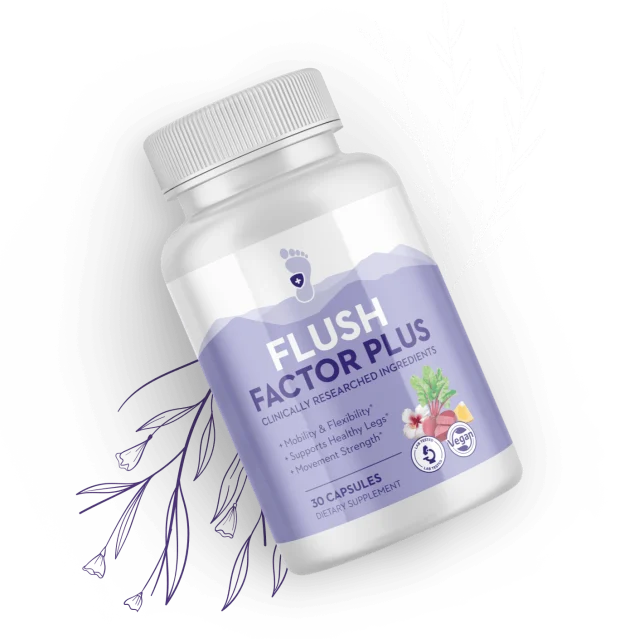 Flush Factor Plus: 30 vegan capsules, one a day.
Why it's our pick
- Built for the right problem. It is made for puffiness in the legs, ankles and feet from standing, heat, salt and travel — not sold as a cure for any disease.
- Every ingredient is on the label. Pineapple powder (the bromelain source), shatavari, L-citrulline, black cumin seed, beet root and hibiscus. Many lymph products don't tell you this much.
- It includes bromelain, the ingredient on this list with trials for soft-tissue swelling, alongside hibiscus, beet and L-citrulline for circulation.
- No stimulants and no harsh classic diuretic herbs. One capsule a day.
- A 60-day money-back guarantee that starts on delivery — long enough for the kind of test the studies above used.
Where it falls short (we'd rather you hear it from us)
- The six ingredients share a 500 mg proprietary blend, so the amount of each one isn't disclosed.
- The finished product has not been tested in a clinical trial. The evidence is for its ingredients, not for the bottle.
- It does not contain horse chestnut or MPFF. If a doctor has diagnosed a vein problem, ask them about those two first.
- Not for people allergic to pineapple. Hibiscus and beet can lower blood pressure, so check with your doctor if you take blood pressure or diabetes medication.
How do you choose any lymphatic drainage supplement?
Whether you pick ours or not, run any bottle through these five questions before you buy.
- Can I see every ingredient? If not, put it back.
- Does at least one ingredient have human studies for swelling? Horse chestnut extract, MPFF and bromelain do. Most "lymph herbs" don't.
- Are the claims modest? "Supports fluid balance" is a supplement claim. "Cures," "treats" or "detoxes your lymph" are red flags.
- Is it safe with what I already take? Bring the label to your pharmacist — it takes two minutes.
- Is the refund window at least 60 days? Studied ingredients were measured over two to three months, not a weekend.
What works better than any supplement?
Remember how lymph moves: muscles squeezing and arteries pulsing. The habits that do that are free, and they work whether or not you take anything.
The everyday drainage routine
- Move your calves every hour. Walk, or do 20 calf raises at your desk. Your calf is the pump. Our swollen calves guide explains why this muscle matters so much.
- Legs up above your heart for 15–20 minutes at the end of the day, like in the photo at the top.
- Compression in the morning, before swelling starts. See our guide to compression socks for swelling for the right pressure.
- Less salt, enough water. Cleveland Clinic advises drinking plenty of water "so lymph can easily move throughout your body."
A supplement, if you choose one, sits on top of these — it doesn't replace them. I learned that the hard way after years of ten-hour retail shifts: the capsule helps, the 6pm walk around the block helps more, and together they're what keeps my ankles in my shoes.
When is swelling a reason to see a doctor, not buy a supplement?
See a doctor if you have:
- Swelling in only one leg, especially with pain, warmth or redness in the calf — get seen the same day.
- Swelling with shortness of breath or chest pain — call 911.
- Swelling that came on suddenly, or is getting worse.
- Red, hot skin with a fever — a possible infection such as cellulitis.
- Swelling after cancer treatment or lymph node removal.
- Unexplained swelling that lasts more than a few weeks — Cleveland Clinic's own threshold for calling a provider.
Our swollen ankles pillar guide covers the full list of warning signs and what each one can mean.
Reader-favorite formula
Ready to try Flush Factor Plus?
If your swelling is the everyday kind — both legs, worse at night, better by morning — Flush Factor Plus is the formula we recommend. Six disclosed plant-derived ingredients, including bromelain, in one capsule a day.
Price, shipping and guarantee. The official site sells bundles only, no single bottles: $158 USD for 2 bottles ($79 each), $207 for 3 ($69 each) or $294 for 6 ($49 each). Shipping is free inside the United States, 5–7 working days ($15.95 USD to Canada, the UK and Ireland, and Australia and New Zealand, 10–15 working days). Every official order carries a 60-day money-back guarantee that starts the day your package is delivered — it covers opened bottles, but you post them back at your own cost. Prices verified on the official checkout on August 25, 2026.
Get Flush Factor Plus on the official site →
Or read the 2026 buyer report first. Affiliate link. Independent review. Not a substitute for a doctor.
Frequently asked questions
Do lymphatic drainage supplements actually work?
No pill pumps lymph the way movement or massage does. What some ingredients can do is reduce how much fluid builds up in the tissue. Horse chestnut seed extract and a micronized flavonoid fraction (MPFF) have human trials showing less leg swelling in people with vein problems, and bromelain has trials for swelling after surgery. Most herbal lymph drops have no human trials at all.
What is the best lymphatic drainage supplement in 2026?
For everyday puffiness in the legs and ankles from standing, heat, salt or travel, our top pick is Flush Factor Plus: a fully disclosed six-ingredient label that includes bromelain, no stimulants, and a 60-day money-back guarantee. Its limits are that the amounts sit in a 500 mg proprietary blend and the finished product has not been tested in a trial. For swelling diagnosed as a vein problem, ask your doctor about horse chestnut seed extract or MPFF.
Can a supplement treat lymphedema?
No. The NHS says there is no cure for lymphoedema; it is controlled with compression garments, skin care, movement and exercise, a healthy lifestyle and specialised massage. The FDA also states that a product sold as a dietary supplement and presented as a treatment or cure for a disease is legally a drug. If you have lymphedema, work with a lymphedema specialist.
How long does a lymphatic drainage supplement take to work?
Plan on weeks, not days. In the MPFF studies, ankle and calf circumference were measured after two months, and horse chestnut extract has been studied for up to 12 weeks. That is why a refund window of at least 60 days matters: it is about the length of a fair test.
Who should not take a lymphatic drainage supplement?
Check with a doctor first if you are pregnant or breastfeeding, take any regular medication (especially for blood pressure, blood thinning or diabetes), or have heart, kidney or liver disease. Skip bromelain products if you are allergic to pineapple. Never take raw horse chestnut seeds, bark or leaves, which NCCIH says are unsafe by mouth.
Is Flush Factor Plus a lymphatic drainage supplement?
It is not labeled as one. It is a fluid-balance formula for puffiness in the legs, ankles and feet, which is the result most people are looking for when they search for a lymphatic drainage supplement. It contains pineapple (bromelain), shatavari, L-citrulline, black cumin seed, beet root and hibiscus.
About the author — Dana Reyes
Founder, The Light Legs Guide
For years Dana worked ten-hour shifts on her feet in retail, so she knows exactly how heavy and sore legs feel at the end of a hot day — and how much a long flight makes it worse. Swelling runs in her family too: her mother, grandmother, aunts and cousins all deal with it. She started The Light Legs Guide to share what actually helped her, with every claim linked to a source you can check.
Dana is not a medical professional. Nothing on this site is medical advice.